

Dear John
"An intellectual says a simple thing in a hard way. An artist says a hard thing in a simple way." —Charles Bukowski

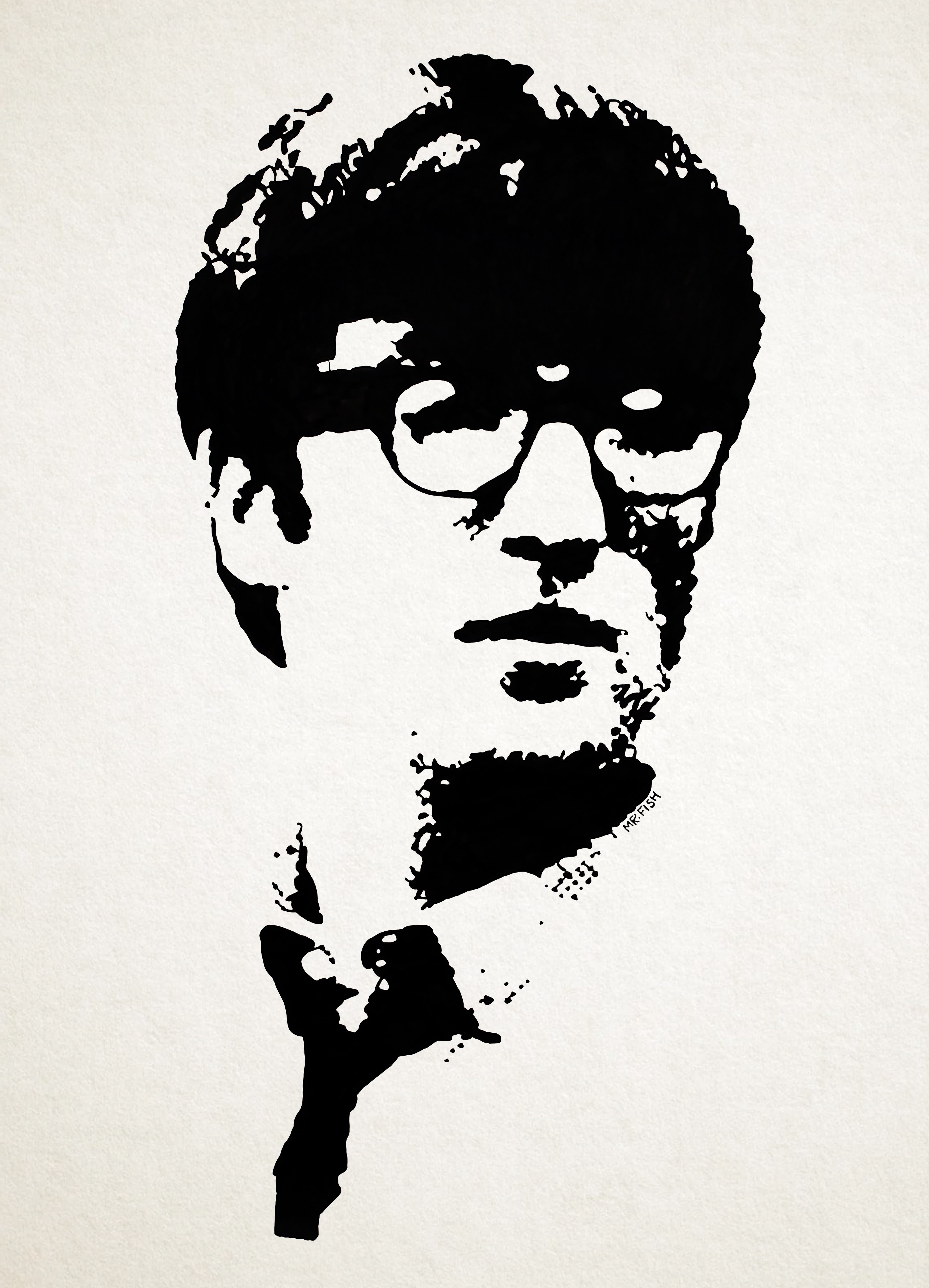
This is an except from my new book, Which Genocide Are You On? which will be available for purchase in early 2027. As indicated in earlier posts, it is a book about artists and writers facing censorship and persecution for criticizing, mocking, and challenging mainstream narratives rendered in deference to hierarchical power structures that reward the privileged and denigrate the marginalized and disposed. Dig it.
***
By the summer of 1966, people living in the United States started to ask questions about the moral legitimacy of the Vietnam War, alternatively referred to as the American War by the North Vietnamese, shortened from its official title of The Resistance War Against America to Save the Nation. Indeed, there were other titles offered by the South Vietnamese—names that had been slathered with ketchup and mustard and fed through Joe McCarthy wiener-first before being captured at the other end by a star-spangled blindfold, or maybe a gag, swarming with flies, a flag when unfurled being a versatile thing—those being the Resistance War Against Communists and the Fight to Protect Freedom. And then there were those who, remembering the imperialistic overreach of the French only a decade earlier, referred to the conflict pragmatically as the Second Indochina War. And while I’m semantically savvy enough to recognize the frustrating truth that the war was able to be all of those contradictory things at once, reality always being rendered relative to the vagaries of perspective, surely had everyone been able to agree on the accuracy of a single title early on—something like: Let’s Be Smart and Avoid the Pointless and Illegitimate Attempt by America to Maintain Hegemony in a Region of the World Populated by 40 Million People Who Should Be Left Alone to Determine Their Own Destiny—all the bloodshed might’ve been averted and replaced with a much less incendiary collection of quaint and healthy curiosities about South East Asia quenchable by tourism alone.
Anyway, as public opinion shifted and opposition to the Vietnam War expanded into the middle classes, a rift between those who saw the US attempt to enslave the world with its own vanity as compulsory and divinely authorized and those who did not began to sow agitation into the mood of the nation. And while the imperative to first recognize and then condemn the ever-accelerating mass murder of what would ultimately result in somewhere between 3 and 4 million dead became more mainstream, there still remained a self-imposed moratorium on anyone in the privileged class inclined to denigrate the complicity of their fellow elites who were either openly advocating for the war effort or secretly profiting from it. It was as if there was an unspoken rule among the rich that said opulence could only be maintained as a luxury so long as the disdain upheld by those excluded from participation in the affluent lifestyle was anchored in jealousy and nothing else. After all, using the excuse of envy to deflect any and all valid criticism of a wealth-based merit system construed by rich people to perpetuate the bogus notion that one’s worth as a human being is inexorably tethered to one’s material prosperity has been a strategy used by the haves to justify the pained existence of the have-nots since the first person was turned into a pariah by having a coin snatched from his hand.
And while it was no secret in 1966 that the most prosperous members of society were less inclined to openly oppose the warmongering mania of the federal government than those with the highest likelihood of either being personally tagged for conscription and turned into cannon fodder or those with loved ones for whom such a fate was most likely, it was never easy to know exactly what rich people as a demographic thought about the war, nor about anything else that existed outside the manicured confines of their own gilded pretensions. The only thing that was 100% clear was just how important invisibility seemed to be for the upper class when opinions were being advanced and challenged in public for without the protective camouflage of complete avoidance—which must include the requisite self-muzzling of those who fed off the plutocracy’s putrid renown as toadies, enablers, and self-serving opportunists—those residing in the upper ranks of the hierarchy knew instinctively that if they were ever pulled into the spotlight of public inspection and asked to offer an opinion on the nitty-gritty of everyday life they would most certainly run the risk of having their qualifications to engage in such talk questioned and their elevated status as untouchables challenged and ultimately delegitimized by common sense and basic logic for there are few things in the world as absurd and preposterous and unjustifiable as hierarchy. It takes a special kind of bigoted ignorance to see the cruel practice of sorting equal human beings into gradated categories of importance despite their obvious intrinsic sameness as anything but perverse, unjust, and unsustainable.
So, when John Lennon—who had been granted entry into this exclusive club of entitled toffs, barons, and nabobs without being fully indoctrinated into the manner of a pedestaled exemplar of guarded self-possession—spoke from the heart to Maureen Cleave in the London Evening Standard to more readers than even the President of the United States could claim about his appraisal of celebrity culture, the transient nature of worshipful fads, the impermanence of public opinion, and the hollow, meaningless center of the prudential lifestyle, all hell broke loose. After all, how was the integrity of a narrative that had been maintained for generations to advance the lie that the natural order of the cosmos was monarchical in structure and that opulence, therefore, was a supreme expression of excellence expected to survive if the hoax that authenticated the sadism that promoted the discrimination of people predicated on their economic status was exposed?
For those who don’t know the history, this was just one more sham controversy engineered by mid-20th century conservative influencers who were able to incite gullible nitwits and religious zealots across the American South into willfully misreading an obvious metaphor and recasting it as an unprovoked attack on an anglicized Caucasian Jesus Christ who had already suffered enough on the cross, having such fair skin and being made to endure such long hours in the sun, the offending quote being, “[The Beatles are] more popular than Jesus now.” Of course, in context and unexpurgated from the paragraph that originally contained it like an index finger that had been amputated from an open hand and advertised as a flipped bird, Lennon’s intention was not at all what his accusers claimed it to be. Here’s the paragraph from which the offending remark was pulled:
Experience has sown few seeds of doubt in him: not that his mind is closed, but it’s closed round whatever he believes at the time. “Christianity will go,” he said. “It will vanish and shrink. I needn’t argue about that; I’m right and I will be proved right. We’re more popular than Jesus now; I don’t know which will go first -- rock ‘n’ roll or Christianity. Jesus was all right, but his disciples were thick and ordinary. It’s them twisting it that ruins it for me.” He is reading extensively about religion.
In response to the incident and fearing a potential disruption to the Beatles revenue stream, Lennon’s management team who had successfully transformed the magnanimity of his artistic impulses and the generosity of his radically charitable spirit into a brand identity worth millions, organized a press conference wherein the singer could issue a counterfeit apology and thereby avert any further financial injury to what was then considered the most lucrative moneymaker in the music industry. Having too much integrity to simply say he was sorry—or, more precisely, having too little patience for empty gestures of decorous etiquette—Lennon refused to offer a blanket apology and took the opportunity to attempt clarification of his statement, albeit to a public that had very little experience watching or listening to a well-known person from the retail industrial complex speak so frankly on matters of fame, pop culture, religion, and prophetic naysayery. The result was mixed, with those most threatened by the exercise of free speech off the page still refusing to forgive him and those needing to see their hero survive a medium-sized firestorm unscathed and returned to the dancing bear spotlight on a stage that featured only scripted and preapproved brilliance. Of course, just a few days following the press conference, Lennon couldn’t help demonstrating his defiance more overtly when asked about the war in Vietnam:
INTERVIEWER: Do you mind being asked questions… about Vietnam—does this seem useful?
LENNON: Seems a bit silly to be in America and for none of them to mention Vietnam as if nothing was happening.
But why should they ask you about it…?
Because Americans always ask show biz people what they think about things, so do the British. Show biz, you know how it is. But you just gotta– you can’t just keep quiet about [everything] that’s going on in the world unless you’re a monk. (Pause, followed by flamboyant mock apology) Sorry monks, I didn’t mean it– I meant actually…
By jeering the presumed naivete of an audience he knew wasn’t really real—being much more of a concoction created by the stewards of hierarchy to justify the dominant culture’s censoring of any and all commentary that had the potential to demean mainstream orthodoxies or traditional ideologies and ultimately the authority of its illegitimate command and control—Lennon was demonstrating by example the real joy of deriding, maybe even insulting, a code of ethics that prioritized silence over speech and spectatorship over participation. After all, any public rebuff of an unassailable governmental, religious, or cultural entity that claims absolute dominance over common knowledge is an encouragement to the average citizen to believe that he or she has a right to speak directly to power, which includes a responsibility to speak in opposition to it whenever necessary. This, in fact, is a clear example as to why the privileged are given a soapbox from which to communicate their eminence and the underprivileged are not: because the privileged will only use such a platform for the solipsistic purpose of singing their own praises and the underprivileged would likely use a soapbox to communicate their questions and concerns regarding the point of perpetuating such an inequitable system of soapbox distribution.
Again, what made the Beatles controversy significant was the spontaneity of the circumstance from which it sprung and precisely what it revealed about the nature of influence, agency, and entitlement in a society purported to be democratic. Lennon, by being a freshmen member of celebrity’s royal family, had not yet been inculcated long enough within the anesthetizing incense of the gentry to learn that there is a strict code of conduct that urges the upper class not to do or to say anything that might encourage the voiceless and oppressed to believe their opinions deserve to be heard, the fear being that once you sanction a communal space for dialogue with those from the lower classes—so named for a wide range of reasons spanning economic to philosophical—you run the risk of invalidating the purpose of the partitions that were originally established to separate them. After all, what good is equality if everybody had it, so goes the rationale from the rich person’s perspective? By nullifying the one remaining extreme prejudice that still has universal appeal, namely the hard-baked discriminatory practice of equating one’s worth as a human being with his or her ability to generate an income and to literally pay others to see them as such—how else to describe a situation that insists on the commodification of a person’s most basic survival needs, meaning that without an income one is denied the ability to eat, be sheltered from the elements, and live with dignity among others?—we’d be left with more freedom, compassion, and autonomy than we’d know what to do with. Gone would be the incentive to easily manipulate the affections of others using the least humane calculous ever devised, so designated for the simple reason that its barbarity is often turned inward in a way that other malicious prejudices are not. A white supremacist, for example, is unlikely to hate himself for the color of his own skin, while a poor person is likely to be consumed by shame and self-loathing for a lifetime, having been conditioned to believe that the crippling agony of feeling worthless is not just a reflection of one’s lousy financial solvency but a measure of who they must be as a failed human being.
What we are left with then, given an America that disproportionately favors the rich and prioritizes the rights and privileges of those who aspire to become rich—who, of course, are those least likely to spoil their chances of becoming a part of the opulent minority by disparaging the profane practices of class stratification, which, unfortunately, has become practically everybody from the lower and middle classes—is a society rigged for self-destruction and destined for collapse, having had every mechanism of introspection dismantled and every method of decision making for the greater good removed from collective consideration and handed over to the most venal and arrogant patricians residing at the top of the most mercenary hierarchy ever conceived. Never in a million years would these men and women consider renovations to a system of their own making, one that insists on memorializing the perverse delusion that they are superior to those they’ve placed in cages, as if the brutality of such an act could be abrogated by chew toys, fresh water, and every conceivable distraction short of real freedom to make the confined feel as if they were living their best life, when in fact the discriminatory requirements of a plutocracy makes certain that it is their only life. Thusly, there should be no expectation that those occupying leadership positions in government, academia, or business would ever voluntarily demote themselves into the equalizing hoi polloi of the common crowd, despite knowing full well that the only way to guarantee fairness and impartiality in the drafting and implementation of rules and regulations is to remain at the mercy of their application.
In other words, only when those in power are able to craft a universal statute that has them relinquishing certain privileges for the purpose of sharing the same reality as all of us, enduring the same hardships undiverted by a wall of riches or a mote of creature comforts, where everyone is made to suffer the same consequences that come with mutual sacrifice, only then can there be justice. Without such a setup we’re stuck being governed, manipulated, penalized, and praised by those with whom we have no shared experiences nor any reason to believe are operating with our best interests at heart. Without such a setup we’re doomed to persist in a disorienting jumble of chutes and ladders ratified by segregation and as easy to revive into a dynamic whole as a shattered pumpkin.
Wow. What a fantastic article... and will be forwarded to my entire email list of about 40 or so friends/family/acquaintances.
I have a very long solo John Lennon playlist (almost two hours, and does not even include his Beatles tracks... which I have as a separate playlist) that I probably end up listening to every month or so. Now, I will cherish that playlist even more than I already do (which I never thought was possible). I was actually unfamiliar with those Lennon quotes. Thanks for the education.
Truth.